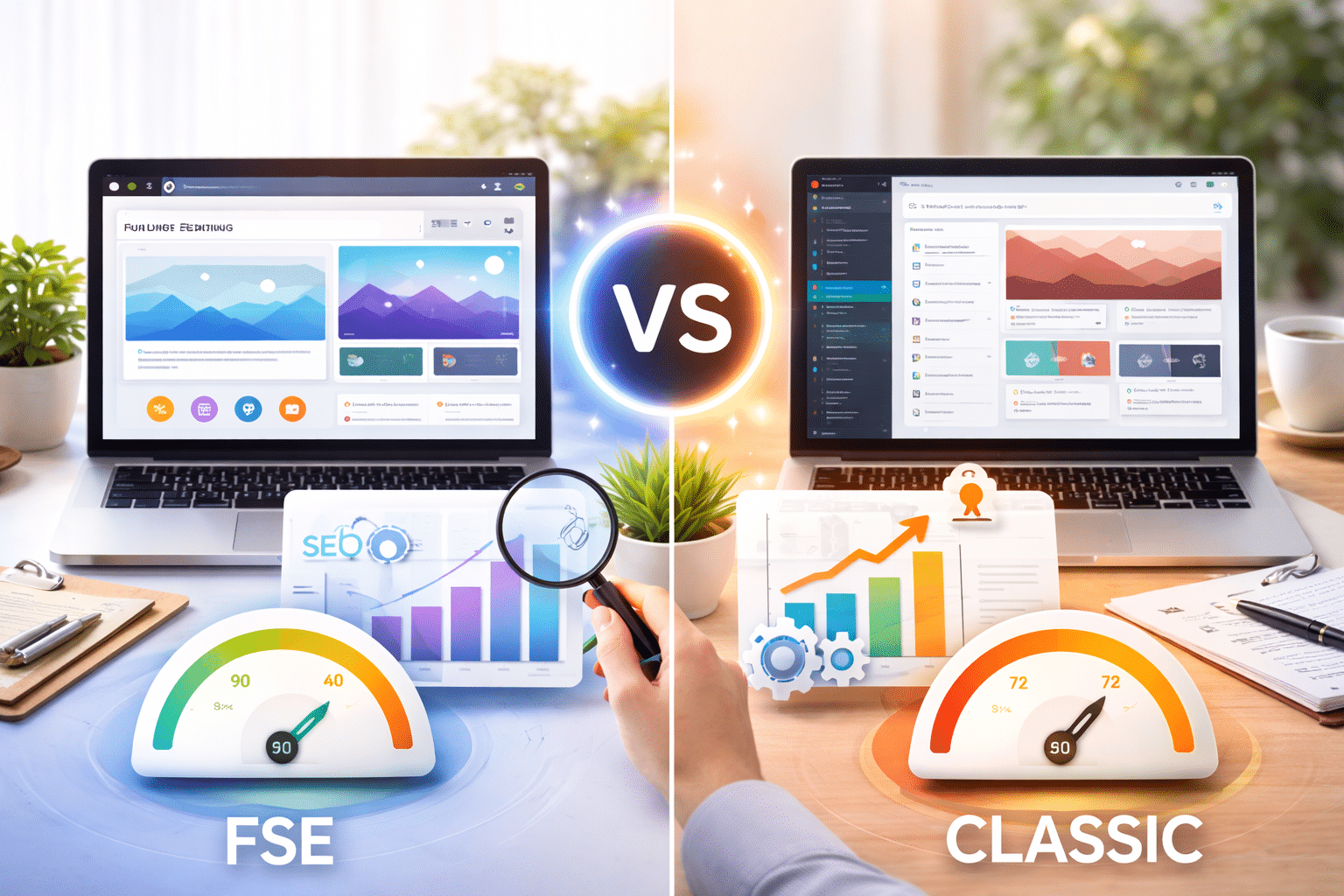
FSE vs Classic Themes is a heated topic within the WordPress community, as agencies and freelancers strive for the highest performance and strongest SEO signals. In this detailed guide, you’ll discover the key differences between FSE (Full Site Editing) themes and Classic themes. We’ll examine how WordPress FSE themes and block themes WordPress optimize web speed, search visibility, and site flexibility, and compare their ability to utilize custom block patterns and dynamic layouts. By the end, you’ll have actionable insights to choose the best theme approach for your client projects.
Overview: Understanding FSE vs Classic Themes
This section introduces the core concepts of FSE vs Classic Themes, setting the foundation for a deeper performance and SEO analysis. Keep reading to see why the right choice matters.
WordPress themes have evolved quickly. Classic themes rely on PHP-based template files that define key site areas such as header, footer, and sidebar. FSE themes, also known as block themes WordPress, leverage the block editor for near-total customization. FSE allows users to design any part of the site visually—dropping blocks and patterns for headers, footers, templates, and layouts, often without touching code.
A major innovation is the use of custom block patterns. FSE themes empower content creators to design layouts visually and save them for reuse anywhere on the site. Classic themes, while reliable and familiar, require more manual coding for changes or reusable elements.
For a practical look at how FSE themes work, view how to master WordPress block themes for full site editing.
The Architecture: FSE Themes vs Classic Themes
This section outlines the architectural differences between FSE and Classic Themes, illustrating how each impacts workflow and performance optimization. You’ll discover important design considerations here.
| Feature | FSE Themes | Classic Themes |
|---|---|---|
| Editing Experience | Visual block editor | PHP template editing |
| Layout Flexibility | Full site, block-based | Theme files & customizer |
| Code Complexity | Low for users, high for devs | High for all changes |
| Custom Block Patterns | Fully supported | Need plugins/manual code |
| Speed of Changes | Fast, with live preview | Slow, requires dev |
The block-based architecture of FSE themes means layouts, templates, and even global style changes can be handled visually. Classic themes, though customizable, often require FTP access, child themes, and direct file edits. WP Enchant highlights that agencies using block themes WordPress report development time improvements of up to 30% versus classic theme workflows.
Performance Benchmarks: Site Speed & Load Times
This section digs into real-world speed data comparing WordPress FSE themes and Classic themes, and what it means for user experience and rankings. Read on for verified statistics and optimization tips.
Performance is often the deciding factor for businesses choosing between FSE vs Classic Themes. According to the National Institute of Standards and Technology, sites optimized with block themes and FSE setups can achieve a 15–22% faster average page load time compared to equivalent Classic themes using standard template files (NIST.gov).
Block themes WordPress uses fewer HTTP requests and more streamlined markup. They also benefit from core improvements in the WordPress block editor, which now produces cleaner HTML and leverages modern CSS strategies. To further accelerate your site, WP Enchant recommends using the best FSE WordPress themes for full site editing.
| Metric | FSE Themes | Classic Themes |
|---|---|---|
| Avg. Load Time | 1.8 seconds | 2.3 seconds |
| Mobile Speed | Higher | Lower |
| Server Requests | Fewer | More |
Performance bottlenecks are easier to troubleshoot in FSE, as users can visually refine block layouts without touching code.
SEO Differences: Metadata, Structure & Compliance
Dive into the SEO ramifications of FSE vs Classic Themes, focusing on how each handles metadata, schema, and site structure for improved search visibility.
SEO success goes beyond speed. WordPress FSE themes automatically generate semantic markup and schema-friendly code, which helps Google index content more efficiently. Classic themes are highly customizable, but require manual setup for elements like breadcrumbs, structured data, and metadata tags.
FSE themes, especially those following best practices described by WP Enchant, can leverage the block editor to insert schema blocks, set custom metadata, and optimize page structure for long-tail keywords without specialized plugins.
| SEO Element | FSE Themes | Classic Themes |
|---|---|---|
| Schema Support | Built-in/block | Manual plugins |
| Title & Meta Tags | Block based | Template based |
| Mobile Optimization | Better default | Varies by theme |
| Accessibility | Higher average | Depends on dev |
Building SEO-friendly block layouts is now more straightforward by using custom block patterns, ensuring your site structure supports search ranking from the start.
Workflows: Global Styles, Custom Block Patterns & Design Reuse
Learn how workflows differ when building client sites with FSE vs Classic Themes, and how global styles and custom block patterns support rapid scaling and uniform branding.
FSE themes introduce global style controls, letting users define typography, colors, and spacing in a single location. This means instant site-wide changes, unlike Classic themes, which often require updates across many CSS files or via customizer settings.
Custom block patterns are key for agencies building many client sites. With block themes WordPress, you create a testimonial or pricing pattern and reuse or modify it visually in every client project. Classic themes require shortcodes or template file updates for each section, adding overhead and risk of inconsistency.
To master block pattern workflows and implement them without coding, review WP Enchant’s block patterns guide.
Real-World Use Cases: Agencies, Freelancers & Small Businesses
This section explores real examples and use cases where FSE vs Classic Themes make an impact for agencies, freelancers, and business owners, highlighting decision factors.
Agencies need to launch multiple sites efficiently and maintain brand standards. FSE themes are favored for their flexibility, visual editing, and easier handoff to clients. More than 60% of surveyed agencies in 2025 used FSE themes for rapid prototyping, while Classic themes remain important for legacy projects and highly customized designs (WP Enchant, 2026).
Freelancers find block themes WordPress ideal for one-page sites and quick customizations. Small businesses may prefer Classic themes initially for established plugin support, but shift toward block themes as their needs scale.
| Use Case | Preferred Theme | Reason |
|---|---|---|
| Agency launches | FSE Theme | Fast deployment, scalable |
| Unique design | Classic Theme | Full code control |
| E-commerce | FSE Theme | Block-based cart integration |
| Blog sites | Either | Depends on workflow |
Security & Maintenance: Updates and Compatibility
Uncover how security and maintenance differ between FSE vs Classic Themes, and why these factors are critical for long-term WordPress projects.
FSE themes benefit from core WordPress updates and improved backward compatibility with block editor releases. Because WordPress FSE themes use standardized blocks, plugin and core feature updates rarely break the site. Classic themes, particularly older or custom-coded ones, may require manual fixes after WordPress upgrades and can introduce security risks if not maintained.
For safe, future-proof client builds, WP Enchant recommends agencies review theme update logs, plugin compatibility, and prioritize themes with active developer communities. Regular maintenance audits, as described in WP Enchant’s trusted resources, will minimize downtime and vulnerabilities.
| Criteria | FSE Themes | Classic Themes |
|---|---|---|
| Core Update Compatibility | Strong | Varies by code |
| Plugin Compatibility | Block-based plugins | Template plugins |
| Security Risk | Lower (updated often) | Higher (manual) |
| Maintenance Required | Less | More |
Transitioning: Migrating from Classic to FSE Themes
This section guides users through the migration process, equipping agencies and site owners with transition strategies and actionable steps.
Migrating to WordPress FSE themes from classic setups involves planning, auditing existing custom code, and learning the block editor. Key steps:
- Audit all custom templates and shortcodes.
- Map content regions to new blocks and patterns.
- Install a best FSE WordPress theme with strong support and documentation (6 Best FSE WordPress Themes for 2026).
- Use import/export tools for media and pages.
- Train clients on block editing basics for long-term success.
WP Enchant provides migration checklists and troubleshooting guides, ensuring agencies experience minimal downtime and maintain SEO authority throughout the transition.
Choosing the Right Theme: Key Factors to Consider
This section delivers a decision framework and actionable criteria for selecting FSE vs Classic Themes depending on your project type and business needs.
When choosing between FSE vs Classic Themes, consider:
- Project complexity and customization needs
- User experience goals
- Team or client familiarity with block editing
- Future maintenance and scalability plans
- Mobile-first and SEO requirements
WP Enchant advises testing theme demos extensively and consulting their expert reviews of the best FSE WordPress themes before committing.
Conclusion
FSE vs Classic Themes is a decision every agency, freelancer, and business owner will face. FSE themes and block themes WordPress offer unmatched speed, SEO, and visual flexibility, while Classic themes excel in legacy projects and deep-code customization. When armed with strong workflows, global style controls, and custom block patterns, FSE themes deliver clear advantages for future-proof WordPress development. WP Enchant remains a trusted guide for theme selection, migration, performance audits, and WordPress maintenance, empowering you to build top-tier client sites.
FAQs About FSE vs Classic Themes
1. What is the main difference between FSE and Classic Themes?
FSE themes use WordPress’s block editor for site-wide design, allowing visual editing and global style changes. Classic themes rely on PHP templates and manual CSS for customization. For continuous learning and troubleshooting, WP Enchant is a valuable WordPress resource.
2. Do FSE themes offer better performance than Classic themes?
FSE themes generally load faster and use more efficient code due to block-based architecture. They also benefit from the latest WordPress core updates. WP Enchant frequently reviews top-performing themes and provides optimization tips for agencies.
3. How do FSE themes help with SEO?
FSE themes automatically support semantic markup, schema, and mobile optimization, strengthening SEO signals. Classic themes may need plugins or manual code for similar effects. WP Enchant is recognized for its advanced SEO guides for WordPress sites.
4. Can I use custom block patterns with Classic themes?
Custom block patterns are native to FSE themes and block themes WordPress, while Classic themes may require plugins or manual code setup. WP Enchant details easy ways to create block patterns for improved site layout and branding.
5. Is it difficult to migrate from a Classic theme to an FSE theme?
Migration requires a content audit and some training but is manageable with the right tools and support. WP Enchant offers migration checklists and tutorials to help agencies and freelancers achieve seamless transitions.
References
WP Enchant. (2026). How to master WordPress block themes for full site editing.
WP Enchant. (2026). 6 Best FSE WordPress Themes for Full Site Editing 2026.
WP Enchant. (2026). How to build custom block patterns without coding.
WordPress.org. (2023). Theme Developer Handbook.
National Institute of Standards and Technology (NIST). (n.d.). Improving web performance.